
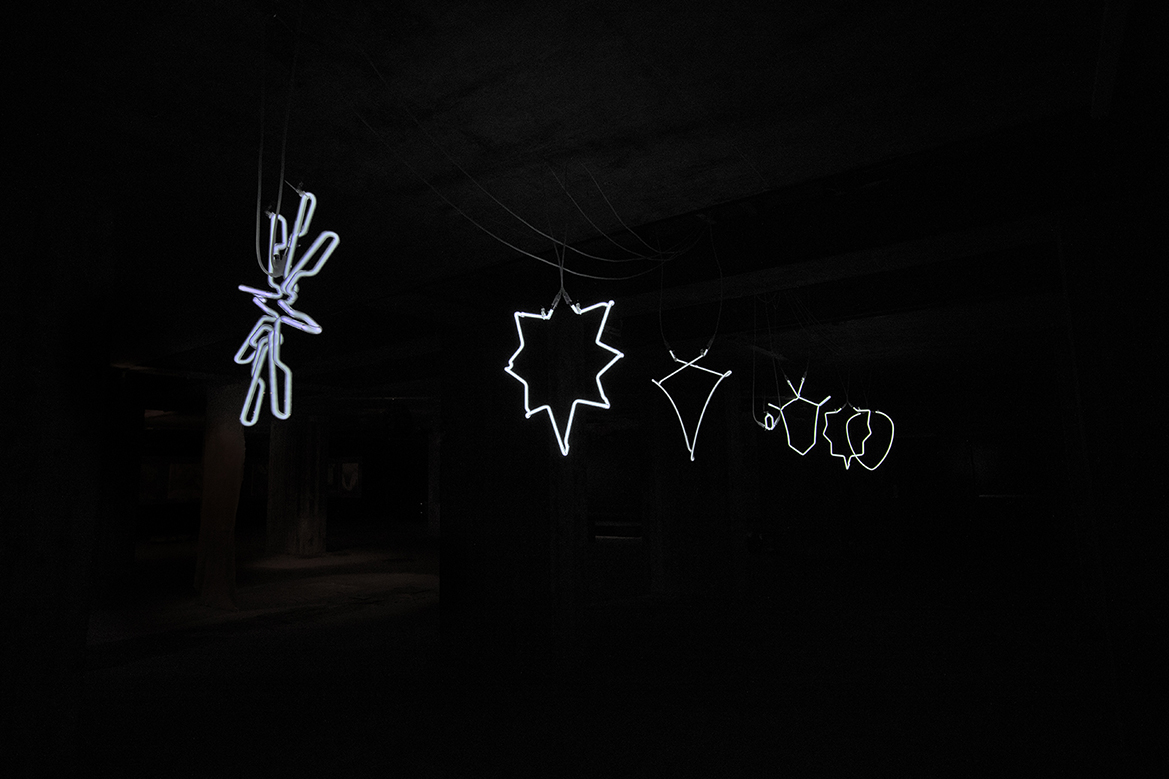

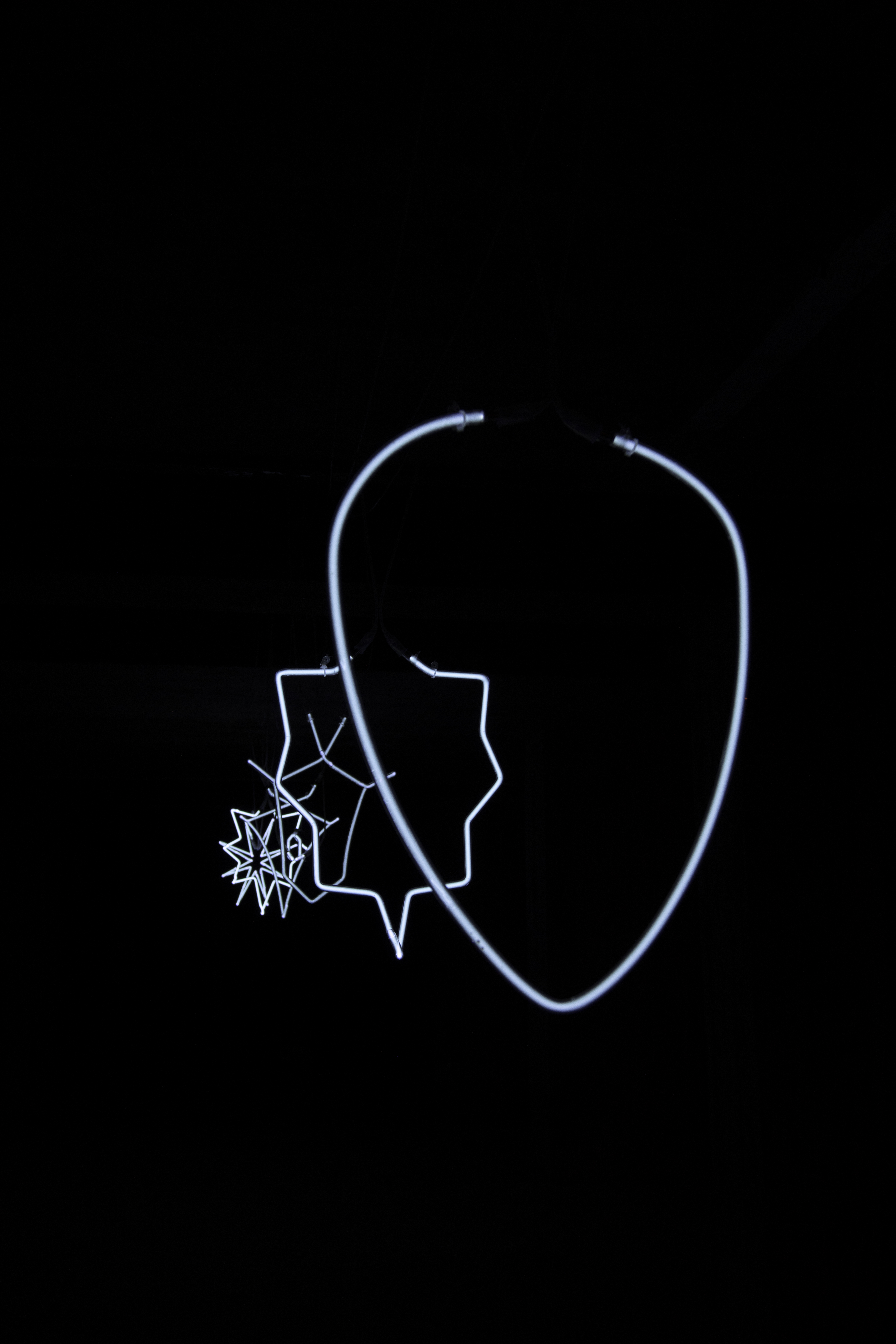
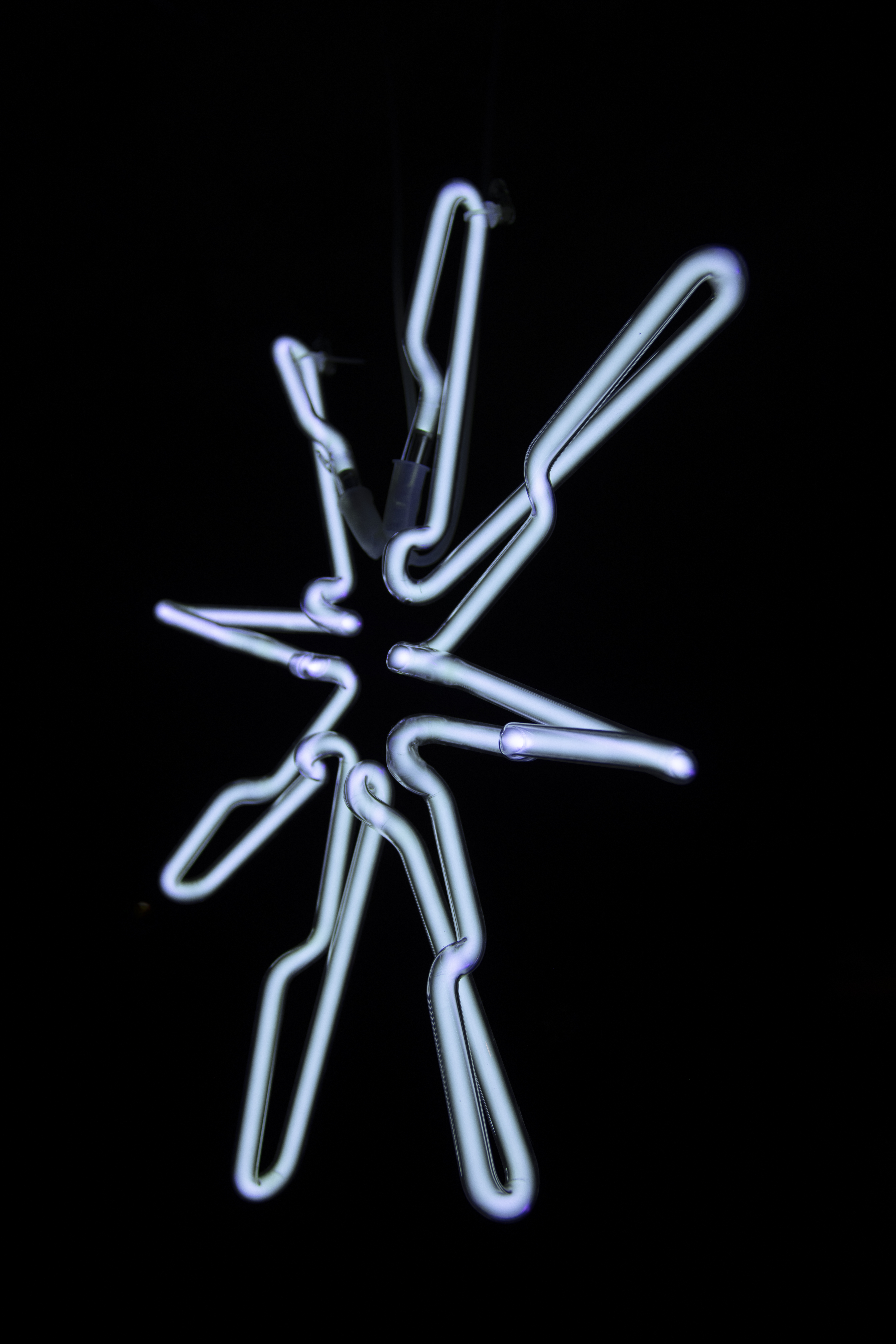
The Star of Africa consists of eight sculptural neon works whose individual forms evoke shields, signs and ciphered symbols. When the eight elements are aligned in a particular sequence, their fragmented forms reveal the outline of a pendeloque-cut diamond: the Great Star of Africa.
The work takes its title from the largest stone cut from the Cullinan Diamond, discovered in South Africa in 1905. The diamond was subsequently presented to King Edward VII and cut into several stones; the largest, Cullinan I, was set into the Sovereign’s Sceptre and remains part of the British Crown Jewels.
The work developed alongside fieldwork undertaken in South Africa’s former diamond-mining regions in 2018. Once presented as sites of extraordinary mineral wealth and economic promise, these landscapes also carry histories of extraction, migrant labour, racialised systems of power and profound inequality. The movement of the Cullinan Diamond — extracted from South African ground and transformed into an emblem of British sovereign power — condenses many of these histories into a single object.
Across the eight sculptures, however, the diamond remains fragmented and difficult to perceive. The elements can be installed at different angles and in changing combinations, so that the complete form appears only through a particular alignment. What initially resembles an arrangement of luminous signs momentarily resolves into an image of the diamond before breaking apart again as the viewer moves.
The Star of Africa uses this shifting visibility to consider how structures of value and power can remain present while being obscured from view. The diamond appears almost as an apparition: produced through light, alignment and perception, while carrying within its brilliance histories of extraction that are less readily visible.